
Top Signs You Need Air Duct Cleaning Service – Don’t Ignore These
Dust on your registers is a lagging indicator. By the time you can see accumulation on the grille, your system has likely been working around a restriction for months. The early warnings show up in your energy bill and your filter, not on the vent cover. Most homeowners in Lake Forest wait for the visible mess before they think about ductwork. The problems worth catching happen well before that.
If you’d rather have someone look than climb into the attic yourself, call (833) 468-5640. We answer 24/7. Fast dispatch from 7am to 7pm, Sunday through Friday.
Key Takeaways
- A filter that clogs in under three weeks is telling you something about duct integrity, not filter quality.
- Longer runtime to reach the same setpoint points to restricted airflow, and ducts are a frequent cause.
- Drywall dust from a renovation is fine enough to settle into duct liner and stay there for a year.
- Santa Ana wind season pushes fine debris into any return-side leakage in Lake Forest homes.
- Pet dander needs mechanical extraction, not just a vacuum pass, because it clings to duct walls.
Your Filter Is Replaced Too Often – Here’s What That Actually Means
If a fresh filter is gray and loaded in under three weeks, the filter isn’t the problem. Something upstream is shedding particulate into the return air faster than the filter can hold it. That usually means the duct system is holding debris on its interior surfaces and releasing it into the airstream every time the blower runs.
A filter’s job is to catch what’s in the air. When it clogs that fast, the air is carrying more than it should. Here’s the diagnostic logic we walk homeowners through:
- 4 to 6 weeks to a loaded filter: fairly normal for a busy household with pets.
- 3 to 4 weeks: worth a look at the return side. There may be a gap, a disconnected section, or heavy surface accumulation.
- Under 3 weeks: the duct system is likely dirty enough to be actively feeding the filter, or there’s a breach pulling air from an unconditioned space.
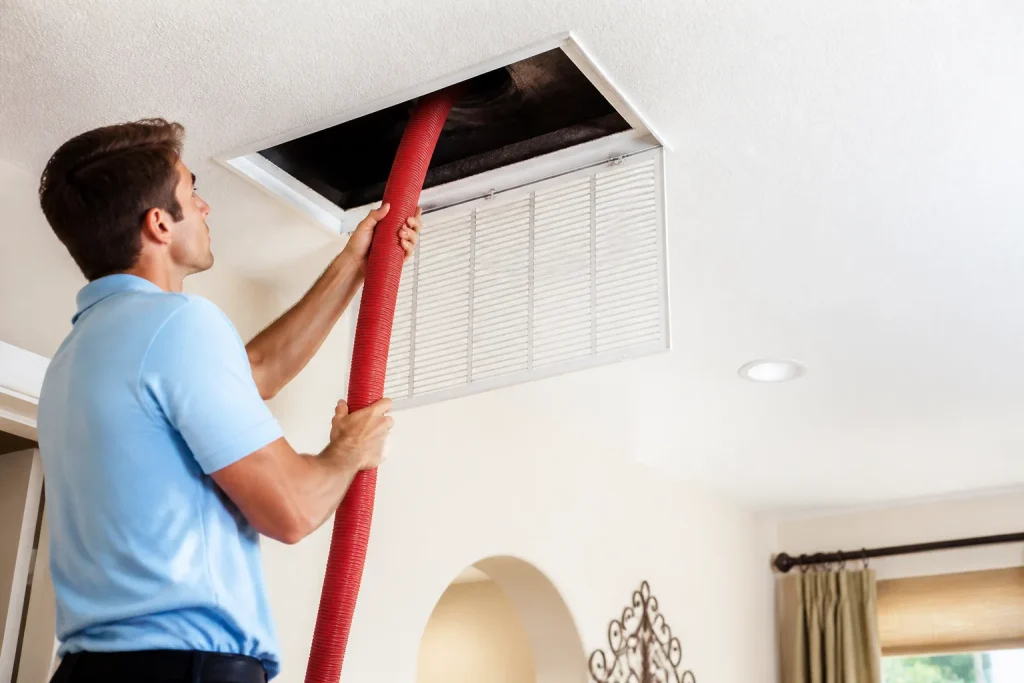
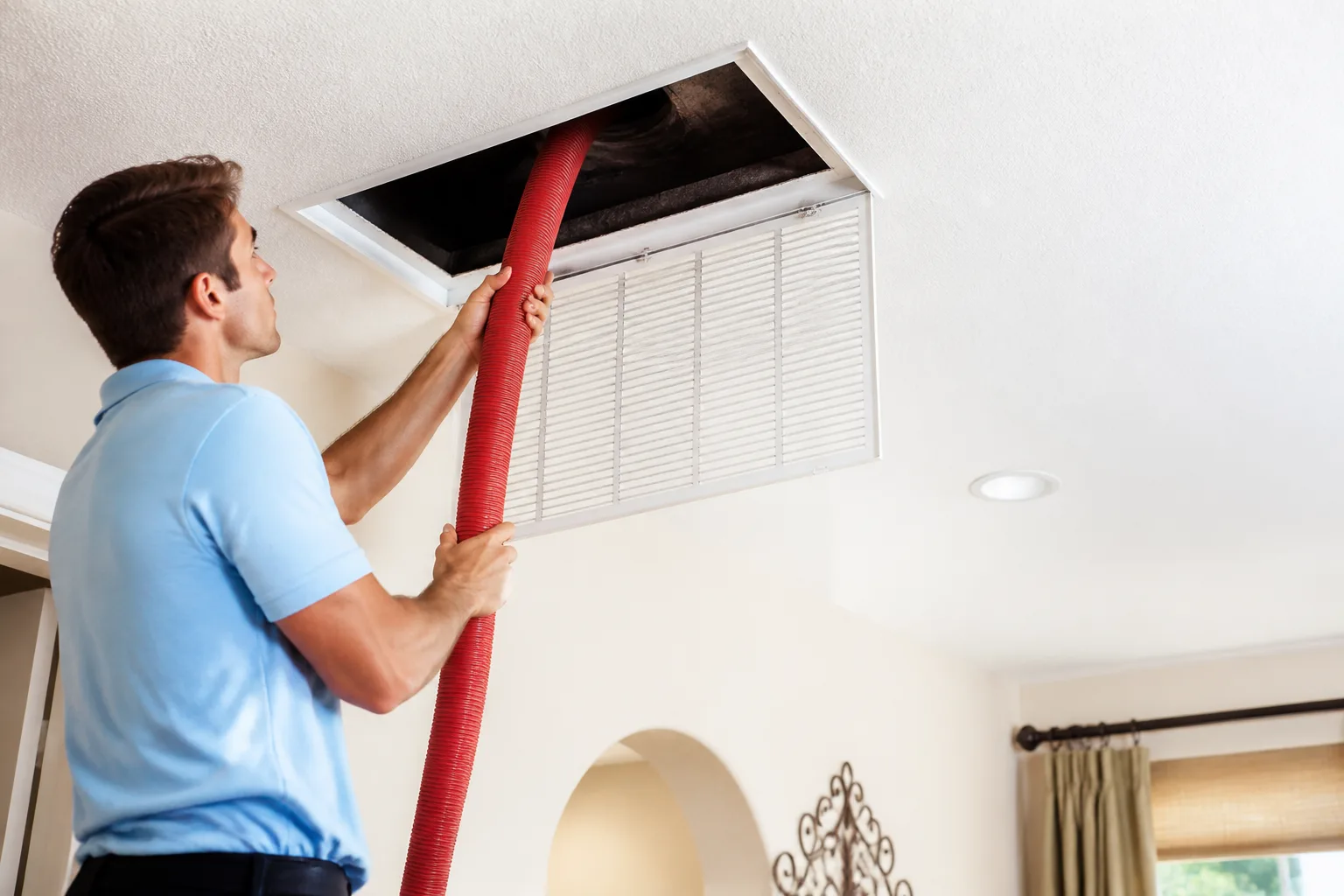
That last case matters more in Lake Forest homes with attic-routed return ducts. A small break in a return run pulls attic air straight into the living space. No filter downstream can compensate for that, and the fix is both a cleaning and a seal. When we inspect, our first step is a mechanical scrub with a Rotobrush rotary brush system so the duct walls themselves are cleaned, not just the airstream passing through them. That’s the difference between a surface pass and a real extraction.
The Runtime-to-Comfort Test: Is Your System Working Harder Than It Used To?
Here’s a question worth asking yourself: two summers ago, how long did your AC run to hit 74 degrees? If the answer today is noticeably longer, the system is losing efficiency somewhere. Restricted ductwork is a leading suspect, and it’s one of the least obvious.
The logic is simple. Airflow is the other half of the cooling equation, and a blower fighting a dirty duct system moves less air per minute. Less air means more runtime. More runtime means a higher energy bill for the same comfort. A system that’s working around a restriction doesn’t announce it; it just quietly runs longer.
What to check before assuming the ducts are the problem:
- Compare a recent energy bill against the same month two years ago, adjusting for rate changes if you can.
- Time a cooling cycle from a warm start. Note how many minutes it takes to reach setpoint.
- Walk the rooms and note whether any feel noticeably warmer than the setpoint, especially rooms at the far end of the run.
If runtime is up and some rooms never quite get there, restricted ducts or a leak in the distribution system are worth ruling out. Static pressure testing during a professional HVAC cleaning visit can confirm what the runtime numbers are hinting at. Comfort problems that show up as “the house just feels uneven” are often airflow problems in disguise.
After a Renovation, Duct Cleaning Isn’t Optional
Drywall dust is a different animal from household dust. It’s fine enough to stay airborne for hours, and fine enough to pass through a standard filter and settle deep in the duct system. Once it lands on duct liner, it doesn’t just sit there; it bonds to the surface and stays for months. Six to twelve months of accumulated drywall particulate is a common finding after a kitchen or bathroom remodel.
Renovation dust also pulls moisture out of the air during curing and can leave a fine alkaline film inside the ductwork. That film doesn’t cause an immediate problem, but it does create a surface that holds subsequent dust more aggressively than bare galvanized metal would.
If you’ve just finished a remodel in Lake Forest, the window to clean is sooner rather than later. Waiting six months means contaminant that could have been extracted cleanly is now compacted onto duct walls. Our air duct cleaning process uses an Abatement Technologies filtration unit on-site to capture the debris we dislodge, so it’s contained during the job rather than blown back through the house. That matters in a freshly renovated home where the living space is already clean.
What Santa Ana Wind Season Does to Lake Forest Ductwork
Santa Ana winds push dry, particulate-heavy air through the canyons and into Lake Forest neighborhoods. That fine material is exactly what a return-side leak invites in. Any gap, failed seal, or disconnected section in the return ducting becomes a channel for wind-driven dust to enter the system directly, bypassing the filter at the register.
What makes this seasonal problem worth attention is where it ends up. Dust pulled in through a return leak in the attic settles into the duct run and stays there once the winds pass. Over a few seasons it accumulates.
Signs this is happening in your Lake Forest home:
- Dust reappears on surfaces faster than usual after a wind event.
- There’s a faint musty or “attic” smell when the system first kicks on.
- Return grilles away from the living space show more accumulation than supply registers.
The fix isn’t just cleaning. Any breach found during the cleaning should be sealed. That’s why we treat duct repair and sealing as part of the same job rather than a separate appointment. Our approach is to clean the full system, then seal what’s leaking. If a contractor cleans the ducts but leaves a disconnected return open, the next wind event undoes the work.
Pet Dander and Ductwork: Why Cleaning Method Matters
Pet dander doesn’t behave like construction dust. It’s protein-based, slightly sticky, and clings to duct walls rather than tumbling through with the airstream. A vacuum pass alone won’t move it. Dander on a duct surface is also a persistent allergen source; every time the blower runs, a small fraction gets re-entrained into the living space.
For households with allergy or asthma concerns, this is the distinction that matters. Construction dust is an irritant. Dander is an allergen, and reducing it requires mechanical agitation of the duct walls followed by high-volume extraction. That’s why we run a Nikro vacuum system alongside the Rotobrush; the combination scrubs the surface and pulls the loosened material out of the system under continuous negative pressure.
After a mechanical clean in a pet household, a sanitizing treatment addresses surface microbial growth and lingering odor at the source rather than masking it. If your system has filtration components from Honeywell or Aprilaire, we’ll also walk through filter compatibility so the replacement filters actually match what the system was designed to run.
When to Call a Pro
If any of the signs above are familiar, it’s time for a proper look. Some checks are within reach for a homeowner: timing a cooling cycle, watching filter intervals, and noting room-by-room unevenness. But the inspection that actually confirms what’s happening inside the ductwork requires equipment most homeowners don’t have, and pulling duct sections apart to look is a job for someone who knows how to put them back together.
Related services in Lake Forest: dryer vent cleaning is worth pairing with a duct appointment, since lint accumulation in a dryer vent is one of the leading causes of residential fires and most HVAC-only contractors skip it. Our technicians have up to 10 years of experience across the full air pathway, from the HVAC unit to every register.
The Bottom Line
Visible dust is the last thing you notice, not the first. The real signals show up in how often you change the filter, how long the system runs, what a renovation left behind, and what wind season pushed through any return-side gap. If those signals are piling up, it’s worth a look inside the system before the next season rolls around.
If you’re in Lake Forest and need help, Lake Forest Air Duct Cleaning Pros offers free estimates. Call (833) 468-5640. We answer 24/7. Fast dispatch from 7am to 7pm, Sunday through Friday. The local pro we connect you with is licensed and insured as the state requires, and you’ll get a written estimate before any work starts. We also bring before-and-after photos of your own ducts, so you’re not taking anyone’s word for what was in there.
Frequently Asked Questions
The strongest signals are diagnostic, not visible: a filter that clogs in under three weeks, longer runtime to reach the same setpoint than a couple of years ago, or a musty smell when the system first kicks on. Visible dust on registers is a late signal, not an early one. If any of these are present in your Lake Forest home, call (833) 468-5640 for a free estimate.
Pricing is set per job by a written estimate, since a single-return home and a two-story with attic runs aren’t the same job. We give you one flat price for the full system before any work begins, so there’s no surprise invoice once a technician is on-site. Call (833) 468-5640 for an exact quote; estimates are free.
Cheap quotes typically cover a surface pass, not a mechanical extraction. A vacuum waved at the registers doesn’t touch what’s bonded to duct walls, and it won’t find a disconnected return. Ask any contractor which equipment they use and whether they’ll seal a breach found during cleaning. If the answer is vague, the quote will be too. Call (833) 468-5640 to talk through what a complete job involves.
It depends on the household, not a calendar. Pet households, homes with allergy or asthma concerns, and homes that just finished a renovation tend to need it sooner than a low-pet household with no recent construction. A filter-life check is the simplest home test. When in doubt, a free estimate will tell you whether it’s actually time. Call (833) 468-5640.
Written by the team at Lake Forest Air Duct Cleaning Pros.
Need Air Duct Cleaning Help?
Call Lake Forest Air Duct Cleaning Pros - the local pro we connect you with is licensed and insured, with free written estimates in Lake Forest.
(833) 468-5640