
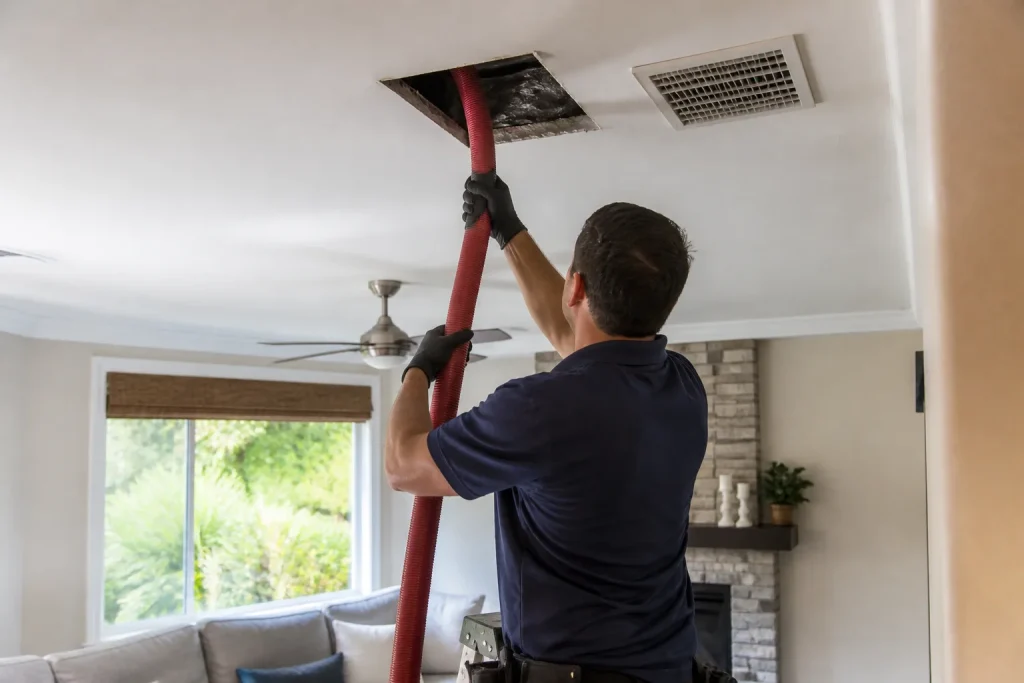
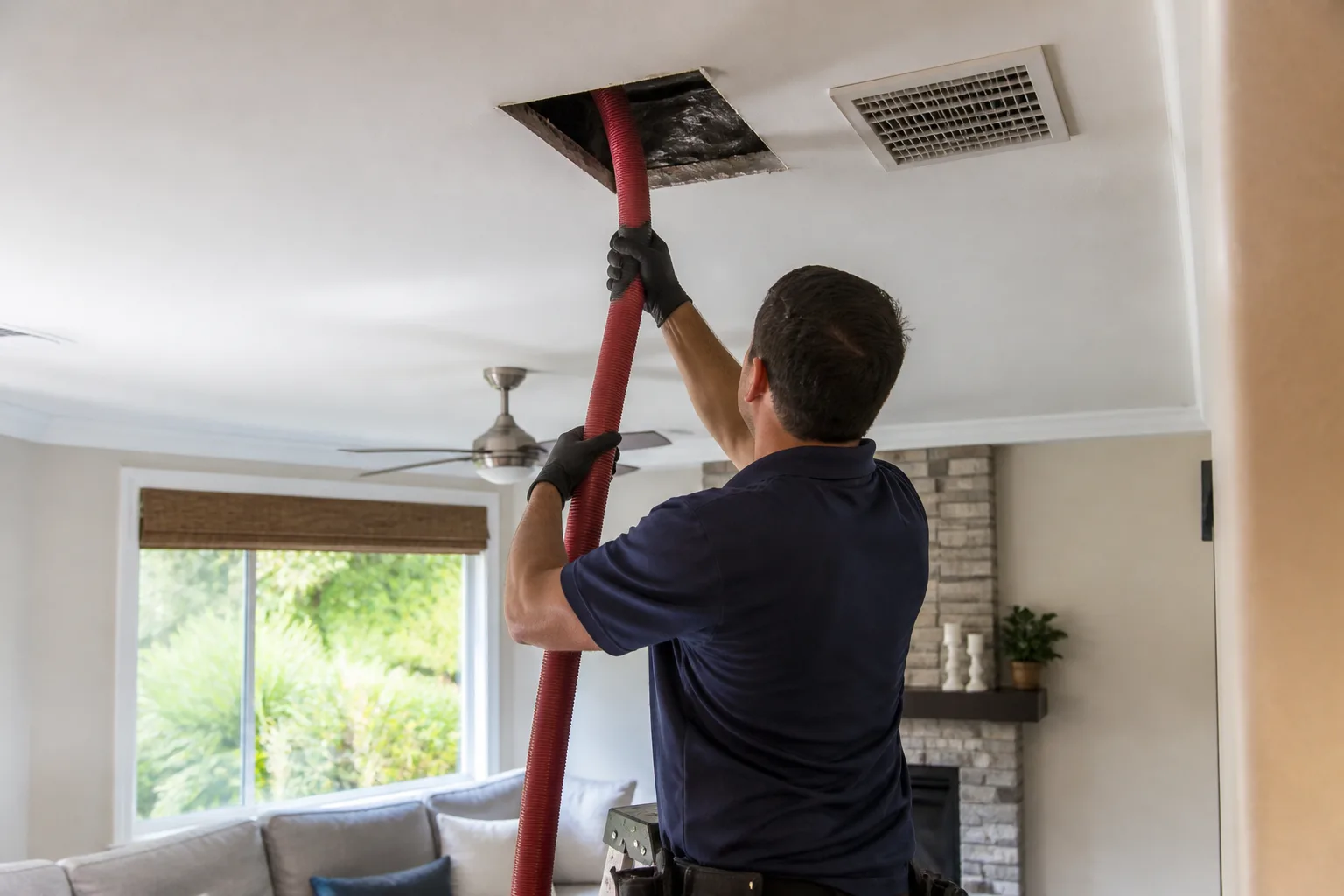
Air Duct Cleaning: Repair or Replace? How Lake Forest Homeowners Decide
Most homeowners ask us the same question when ducts start acting up: is it worth repairing the system, or is it time to replace it? The honest answer is that this isn’t mainly a question of age. It’s a question of whether your existing duct layout can deliver proper airflow to the load your house actually carries today. A duct system designed for a 1992 Lake Forest track home was sized around 1992 cooling loads. If that same home has since added a sunroom, swapped out single-pane windows, or bumped up attic insulation, cleaning and sealing the original layout may be solving the wrong problem entirely.
That distinction matters more than most quotes acknowledge. We’ve walked into plenty of Lake Forest homes where a low per-foot price looked attractive until nobody asked whether the trunk line could move enough air in the first place. Here’s how we walk a homeowner through the decision.
Why Duct Age Isn’t the Real Deciding Factor
The year your ducts went in tells you what they were built to handle, not whether they still work for your house. A ten-year-old system can be undersized for a load that’s grown; a thirty-year-old system with clean, sealed, properly sized runs can outperform it. What matters is the match between duct capacity and what your HVAC unit needs to push through.
In our experience across Lake Forest, the homes that get this wrong usually fall into a few familiar patterns:
- A sunroom or bonus room added years after the original build, with the ductwork never rebalanced to serve it.
- Window and insulation upgrades that dropped the cooling load, leaving oversized ducts pushing air too slowly through each room.
- A replacement HVAC unit sized larger than the original ducts were ever meant to feed.
None of those are age problems. They’re design problems. A contractor who quotes you straight off the calendar year or the foot count of ductwork is skipping the question that actually decides the answer. We clean and inspect the full pathway from the HVAC unit to every register, because that’s where the mismatch shows up, not on an invoice line for linear feet.
The Three Technical Criteria That Point Toward Replacement
There are specific, measurable conditions that push a system toward replacement rather than repair. These are the ones we check first, and the three that come up most in Lake Forest:
- Undersized trunk lines. If the main trunk can’t move the volume your air handler needs, cleaning won’t fix a delivery problem. Sealing a small trunk line just makes a tighter small trunk line.
- Flex duct runs over 25 feet with excessive bends. Long flex runs with sharp turns create friction that eats static pressure and starves far rooms. Short of rerouting the entire run, there’s a ceiling on what sealing can recover.
- R-value below current California Title 24 requirements. Ducts sitting in a hot attic with thin or degraded insulation lose conditioned air before it ever reaches a register. When the duct insulation itself is below what the current energy code calls for, the fix is usually re-insulating or replacing those sections, not cleaning them.
When two or more of these apply, replacement moves to the front of the conversation. When only one does, we look hard at whether a partial repair gets you there for far less. Our Rotobrush rotary-brush system lets us scrub and inspect duct walls so we’re making the call on what’s actually inside the duct, not a guess from the outside.
How Leakage Testing Turns a Gut Call Into a Number
A blower door and duct blaster test takes the guesswork out of repair-or-replace. The blower door measures how leaky the house envelope is; the duct blaster pressurizes the duct system alone and measures how much air escapes before it reaches your rooms. The result is a leakage figure you can compare against a target, which is far more useful than a technician’s opinion.
Here’s what that testing actually gives you:
- A baseline. A measured leakage number before any work, so the comparison is apples to apples.
- A repair threshold. A duct system leaking at a certain rate can often be brought into range through sealing alone. One that’s failing structurally or badly undersized won’t get there no matter how much sealant you apply.
- A verification step. A second test after sealing confirms the work actually closed the gaps. Without it, you’re trusting the invoice.
This is the part of the process we care most about getting right. Sealing without a baseline is guesswork dressed up as precision. When we seal a system, we run a filtration unit on-site (we use Abatement Technologies equipment) to capture what we dislodge, then we let the numbers tell us whether the fix held. That’s what makes the repair-or-replace call defensible rather than arbitrary.
Cleaning and Sealing: The Middle Path Most Homeowners Miss
Full replacement isn’t the only alternative to a basic clean. Sealing a compromised system is often the right middle path, and it costs a fraction of what replacement does. Aeroseal and mastic sealing both close the leaks that bleed conditioned air into your attic or crawlspace; they just do it from different directions and address different leak types.
Mastic sealing is a brush-on application at the joints and connections you can physically reach. Aeroseal is an aerosolized sealant blown through the duct system that coats the interior and closes leaks from the inside out, including the ones behind walls you’d otherwise have to open up. Which one fits your ducts depends on where the leaks are concentrated.
Here’s when the middle path usually wins:
- The duct layout is fundamentally sound and meets the sizing criteria above.
- The leakage rate is within a range sealing can realistically close.
- The duct insulation is intact even if the joints have opened up.
When we finish a job like this, we don’t leave it at the seal. A sanitizing treatment addresses microbial growth and odor at the source rather than masking it with fragrance. We also know our way around Honeywell and Aprilaire filtration systems, so if your filter setup needs a look at the same time, we can speak to compatibility instead of leaving you to sort it out later. It’s one visit covering the whole air pathway rather than three contractors tripping over each other.
Why Lake Forest Attics Shorten the Repair Timeline
Attic temperatures in Lake Forest can climb past 150°F in summer, and that heat is brutal on flex duct. The inner liner stiffens, the insulation jacket sags, and the outer vapor barrier degrades faster than it would in a milder climate. A flex run that would hold up for years in a cooler region can start losing R-value and pulling apart at the joints well before then.
This changes the math on repair for a specific reason: heat damage often concentrates at the outermost, most exposed runs, not evenly across the system. When we inspect and find those runs are the only ones compromised, spot repair and re-insulation can buy real time without touching the sound sections. When the damage has spread through the trunk and most of the branches, the calculation shifts toward replacement.
We check the attic side of every job for that reason. The ductwork in the conditioned space tells you half the story; the runs baking in the attic tell you the other half. Cleaning the full system and then going straight to sealing the leaks we find above the ceiling is often the most useful thing we can do for a Lake Forest home before the next hot summer.
What to Ask Before You Agree to Full Replacement
Before any contractor tears out your ducts, ask to see a Manual D calculation. This is the industry’s standard method for sizing ductwork to an actual airflow requirement, and it’s the document that proves a new layout will improve distribution rather than just replace one problem with another. If a contractor can’t produce one, you’re agreeing to a design nobody has actually verified.
Here’s what a thorough pre-replacement conversation should cover:
- A Manual D calculation confirming the proposed trunk and branch sizing matches your equipment’s airflow needs.
- Existing leakage measurements so you can compare the before and after, not just trust the after.
- A clear scope of what gets replaced versus what gets reused, with the R-value target spelled out against Title 24.
- Before-and-after photos of your own ductwork, not a portfolio of somebody else’s.
One flat price per system, agreed before work starts, with those photos backing up the finished product, is how a job like this should look. That’s the standard we hold our own work to, and it’s the standard worth asking every contractor about.
When to call a pro: if you’ve got rooms that never get cold no matter what you set the thermostat to, musty smells that come back after a filter change, or a recent renovation that added space without adding ductwork, it’s worth having the system inspected and tested rather than guessing. Our technicians have up to 10 years of experience with the equipment that produces an actual number.
Related services in Lake Forest: learn more about our air duct cleaning process, our HVAC cleaning scope, and our dryer vent cleaning work.
The Bottom Line
Repair versus replace comes down to whether your existing duct layout can deliver the airflow your home actually needs today, not how many birthdays the ductwork has had. Check for undersized trunk lines, long flex runs with too many bends, and R-value below Title 24. Run a duct blaster test to get a real leakage number. And if replacement is on the table, ask for a Manual D calculation before you sign anything. For most Lake Forest homes, cleaning, sealing, and re-insulating the right sections closes the gap without a full tearout.
If you’re in Lake Forest and need help, Lake Forest Air Duct Cleaning Pros offers free estimates. Call (833) 468-5640. We answer 24/7. Fast dispatch from 7am to 7pm, Sunday through Friday. You can also read more about our work at Lake Forest Air Duct Cleaning Pros.
Frequently Asked Questions
You need duct leakage testing and a review of three criteria: trunk line sizing, flex run length and bends, and whether your duct insulation meets current California Title 24 R-value requirements. If two or more fail, replacement comes into play; if one fails, repair and sealing often solve it. Call (833) 468-5640 to schedule an inspection.
Yes, when the layout is sound and the leakage is within a range sealing can close. Mastic sealing handles joints you can reach, and Aeroseal closes leaks from the inside. A verified post-seal test confirms it worked. Call (833) 468-5640 to find out if your system qualifies.
Attic temperatures over 150°F in summer accelerate breakdown of flex duct, from inner liner stiffening to insulation sag and vapor barrier failure. It’s one more reason a quick visual check before summer is worth the call. Call (833) 468-5640 for a free estimate.
A Manual D calculation confirming the new layout improves airflow distribution, before-and-after leakage numbers, a clear scope with R-value targets, and photos of your own ductwork. One flat price per system, agreed before work starts. Call (833) 468-5640 if you’d like to talk through your options first.
Written by the team at Lake Forest Air Duct Cleaning Pros.
Need Air Duct Cleaning Help?
Call Lake Forest Air Duct Cleaning Pros - the local pro we connect you with is licensed and insured, with free written estimates in Lake Forest.
(833) 468-5640