
Emergency Air Duct Cleaning Near Me: What Lake Forest Homeowners Should Do First
If smoke, sewage odor, or a dead animal has gotten into your ductwork, the first move is to shut off the air handler, not to start calling cleaners. Running the blower pulls contaminated air through the entire system and pushes it into every room. Once the system is off, you can figure out what kind of event you’re dealing with and take the right steps. If you’d rather not handle that alone, call (833) 468-5640 and we’ll talk you through it.
We’re the team at Lake Forest Air Duct Cleaning Pros, and we’ve walked into plenty of Lake Forest homes where the HVAC was humming along happily, redistributing whatever was in the ducts to every bedroom. That’s the part most people don’t think about until later.
What Counts as a Real Duct Emergency in Lake Forest?
A genuine duct emergency means the contamination is active, hazardous, or spreading. Three scenarios qualify: smoke infiltration after a kitchen or household fire, sewage odor from a failed drain line that runs above or near a duct chase, and confirmed rodent or animal intrusion inside the ductwork. Everything else is urgent but not immediate.
Here’s how we separate the two:
- True emergency: smoke residue coating duct interiors after a fire, raw sewage smell entering living spaces through supply registers, evidence of rodents (droppings, nesting material, chewing damage) inside ducts or at vents, or visible mold growth spreading through duct surfaces.
- Urgent but not immediate: musty odors that come and go, uneven airflow between rooms, visible dust streaks around registers, or a recent renovation that left construction debris in the system. These matter, but they don’t require shutting anything down tonight.
In Lake Forest, we see a lot of the renovation category. The city’s older neighborhoods have homes that have been through multiple remodels, and drywall dust and debris often settle into return chases. Mild winters mean the HVAC runs nearly year-round here, so whatever sits in the ducts gets circulated constantly. The climate is gentle, but the airflow is relentless.
One light note: if your duct emergency involves a possum that has taken up residence in the return, you’re not the first Lake Forest homeowner to make that call. You won’t be the last either.
Why Shutting Off the Air Handler Is Step One
Shut off the air handler at the thermostat and, if you can reach it safely, at the breaker. That single action stops the spread. A running blower can move contaminated air from a single return into every supply register in the house in under three minutes. Smoke particles, rodent dander, and sewage bacteria don’t wait politely in one room.
Here’s the sequence we recommend:
- Turn the system off at the thermostat, then at the breaker panel if you can reach it without touching wiring.
- Close supply registers in the affected rooms to slow passive airflow.
- Open windows in the affected area if outdoor air quality allows, and keep interior doors closed to limit cross-drafting.
- Do not run fans or portable air cleaners that pull air through the system.
- Note the time you shut the system down and how long it ran after the event started. You’ll want both for insurance.
We can’t say this strongly enough: do not open the air handler cabinet or ductwork yourself to investigate. Electrical components, sharp metal edges, and whatever is living in there make it a job for someone with the right equipment and protective gear. If you suspect a gas odor, leave the house and call your gas utility first, not a duct cleaner.
How to Contain a Single Zone While You Wait
If you can’t shut down the entire system (some homes have zoned controls, or the air handler serves a rental unit you can’t fully isolate), contain the affected zone instead. Close the supply registers and the return grille in that zone, tape plastic sheeting over the return if it’s accessible and safe to reach, and keep doors closed to separate that area from the rest of the house.
This isn’t a permanent fix. It buys you time. If the contamination is coming from a single return in a Lake Forest home with a split system, isolating that return can keep most of the house clean while a technician is on the way. Our team uses air duct cleaning equipment with on-site filtration so that when we do open the system, dislodged debris gets captured rather than recirculated. The containment step you take before we arrive makes that job faster and more complete.
For sewage odor specifically: find the source first if you can. A failed drain line or a dry trap in a floor drain can mimic duct contamination. If the smell is strongest near a bathroom or laundry area rather than a vent, the ductwork may not be the problem at all. A plumber might be your first call.
What a Proper Emergency Response Scope Looks Like
Emergency duct response is not just cleaning. It’s inspection first, then cleaning, then repair and sealing. A surface clean without inspection misses the three things that matter most after a contamination event: structural compromise, pest entry points, and smoke or moisture damage to the duct liner.
Here’s what we check and why:
- Structural integrity: disconnected duct sections, crushed flex runs, or failed joints that let contaminants bypass the filter entirely. We clean the full system, then seal what’s leaking.
- Pest entry points: gaps at the foundation line, unsealed penetrations, or damaged exterior terminations where rodents got in. Cleaning without sealing invites a repeat visit.
- Liner damage: smoke residue and moisture can degrade internal duct lining. If the liner is compromised, cleaning alone won’t fix the air quality problem.
- Sanitizing: after mechanical cleaning, we apply a sanitizing treatment to address microbial growth and odor at the source. Masking a smell with fragrance is not the same thing.
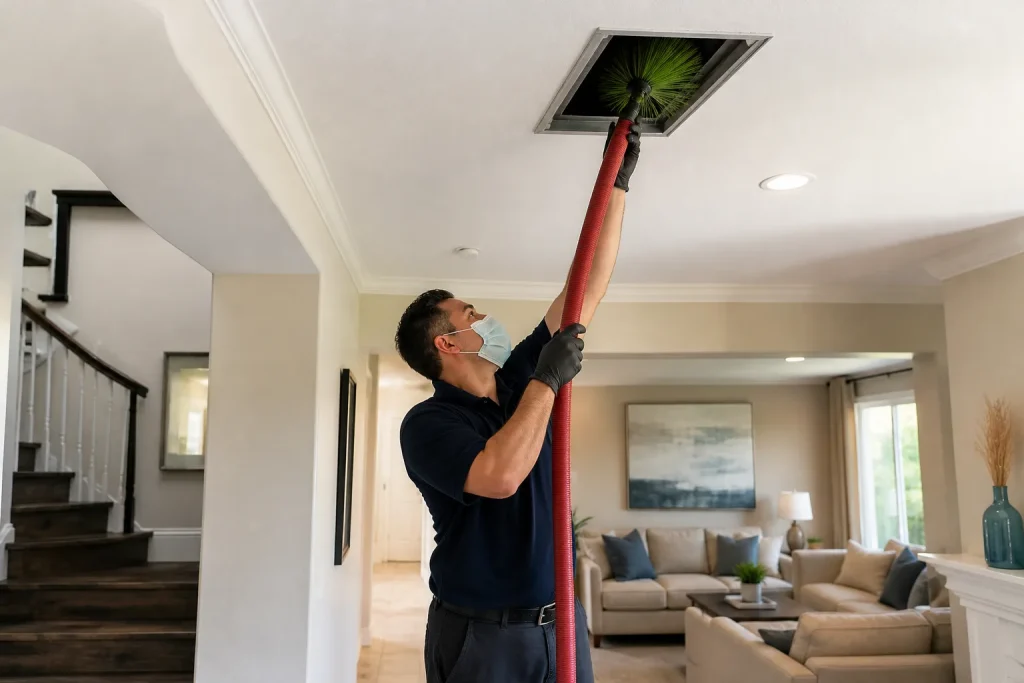
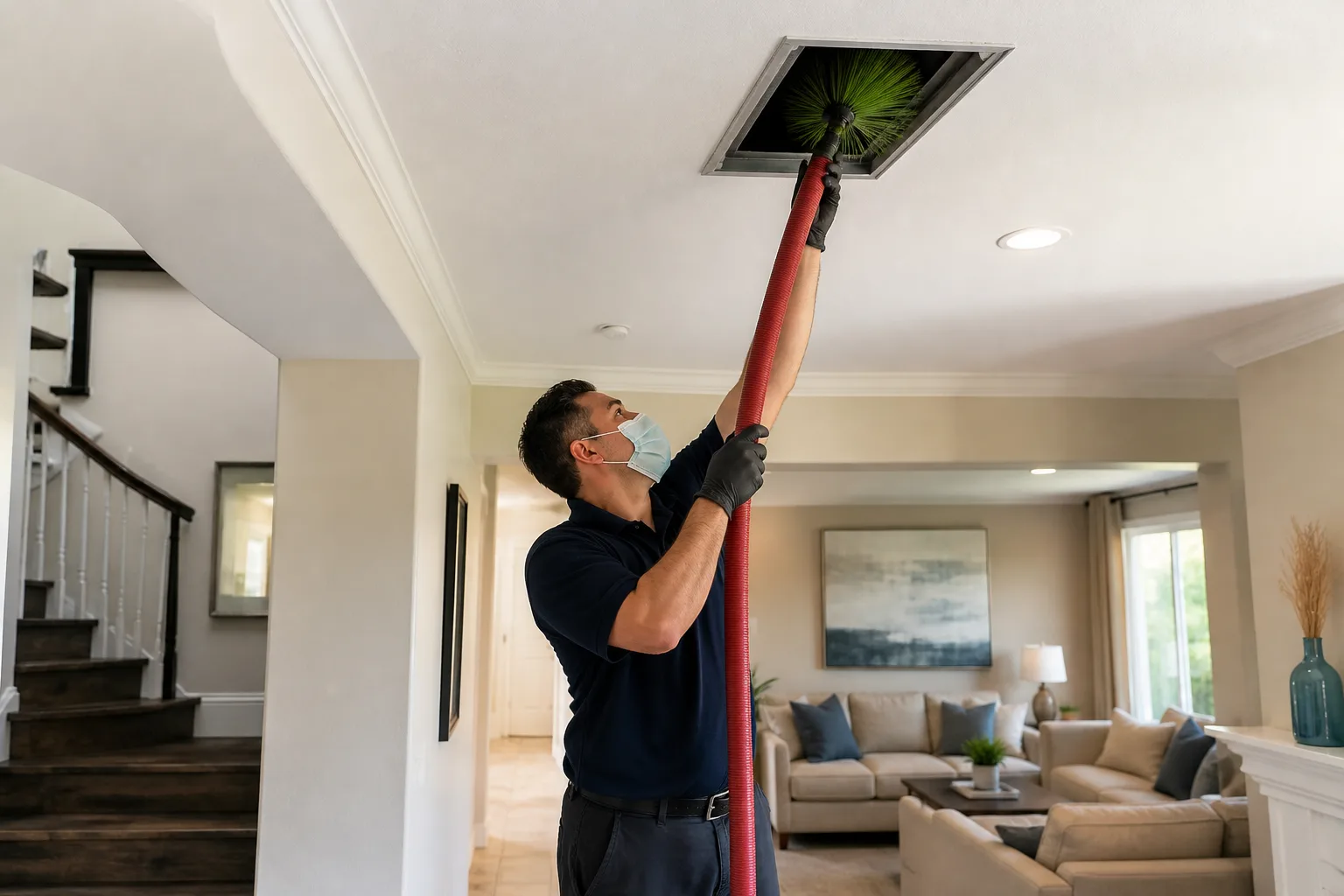
Our technicians use Rotobrush and Nikro rotary-brush extraction systems for the mechanical scrub and Abatement Technologies filtration to contain debris on-site. The full-pathway approach matters here: from the HVAC unit to every register, because a contamination event doesn’t respect the boundaries of one duct run.
When to Call a Pro (and What to Have Ready)
Call a professional the moment you confirm contamination inside the system, suspect pest intrusion, or can’t identify the source of a persistent odor after shutting the system down. Don’t wait for it to “air out.” In our experience, duct contamination doesn’t resolve on its own, and the longer a system sits with smoke residue or rodent activity, the more it spreads through the HVAC cleaning scope when the system finally runs again.
Before anyone arrives, document what you can. Photos of visible debris at registers, the thermostat setting at the time of the event, how long the system ran afterward, and any receipts for damaged items. If you filed a homeowners insurance claim, keep that claim number handy. Insurance often covers duct cleaning after a covered event like a fire, but the documentation needs to exist before cleaning starts. Once ducts are cleaned, the evidence is gone.
We answer 24/7. A call outside dispatch hours is booked into the next opening, Sunday through Friday, 7am to 7pm. If a duct emergency hits on a Saturday, call and we’ll book you for Sunday. We’re closed Saturdays.
While we’re on the subject of things people forget to check: if your dryer vent cleaning has been put off, a lint-clogged vent is its own kind of emergency waiting to happen. Different problem, same instinct to address it before it becomes one.
Related services in Lake Forest: air duct cleaning, HVAC cleaning, dryer vent cleaning, and duct repair and sealing, all handled by one company.
What to Document for Insurance Before Cleaning Starts
Photograph everything before a technician touches the system. That means visible debris inside registers, the thermostat reading, the breaker position, and any staining or damage around vents. Note the date and time of the event, the number of hours the HVAC ran afterward, and any medical visits related to respiratory symptoms. All of it supports a claim.
Ask the cleaning company for a written scope before work begins: what will be cleaned, what will be inspected, what repairs are recommended, and the price for each. One flat price per system, agreed before work starts, protects you from the bait-and-switch pattern that gives this trade a bad name. We provide before-and-after photos of your own ducts so you can see what was actually removed. If a company won’t put the scope in writing, that’s your answer.
For Lake Forest homeowners dealing with older homes, we also recommend asking whether the inspection includes the duct liner and the connection points at the air handler. Those are the spots most likely to hide damage after a fire or pest event.
The Bottom Line
Real duct emergencies come down to three scenarios: smoke infiltration, sewage odor from a failed drain line, and confirmed rodent intrusion. In every case, the first action is shutting off the air handler, not booking a cleaning. Contain the affected zone if full shutdown isn’t possible, document everything for insurance, and call a professional who will inspect before cleaning and put the scope in writing.
Our technicians have up to 10 years of experience working with the full air pathway, from HVAC unit to vent register, and we work with systems from Honeywell, Aprilaire, and Guardsman. We clean the full system, then seal what’s leaking. If you’re in Lake Forest and need help, Lake Forest Air Duct Cleaning Pros offers free estimates. Call (833) 468-5640. We answer 24/7. Fast dispatch from 7am to 7pm, Sunday through Friday. You can also start at our Lake Forest Air Duct Cleaning Pros home page to see the full scope of what we handle.
Frequently Asked Questions
Duct cleaning in Lake Forest typically runs $400 to $900 for a whole-house system, with emergency situations involving smoke, sewage, or pest contamination often landing toward the higher end because inspection and sanitizing are usually part of the scope. Repair and sealing, if needed, are quoted separately. The written estimate sets the final price. Call (833) 468-5640 for an exact quote; estimates are free.
No. Shut the system off at the thermostat and the breaker before doing anything else. A running blower can push smoke particles or rodent dander into every room in the house within minutes. Keep it off until a technician has inspected the ductwork and confirmed it’s safe to run.
It often does when the contamination comes from a covered event like a fire or a burst pipe, but coverage depends on your policy. Document everything before cleaning starts: photos, the time the system was shut down, and how long it ran afterward. Once the ducts are cleaned, that evidence is gone. Ask your insurer about the claim before you book the work.
Ask for before-and-after photos of your own ducts, not stock images. A company that uses rotary-brush extraction with on-site filtration, like the Rotobrush and Nikro systems we use alongside Abatement Technologies filtration, can show you what came out of the system. If a company can’t produce photos of your specific job, ask why.
Written by the team at Lake Forest Air Duct Cleaning Pros.
Need Air Duct Cleaning Help?
Call Lake Forest Air Duct Cleaning Pros - the local pro we connect you with is licensed and insured, with free written estimates in Lake Forest.
(833) 468-5640