
Last updated November 25, 2026
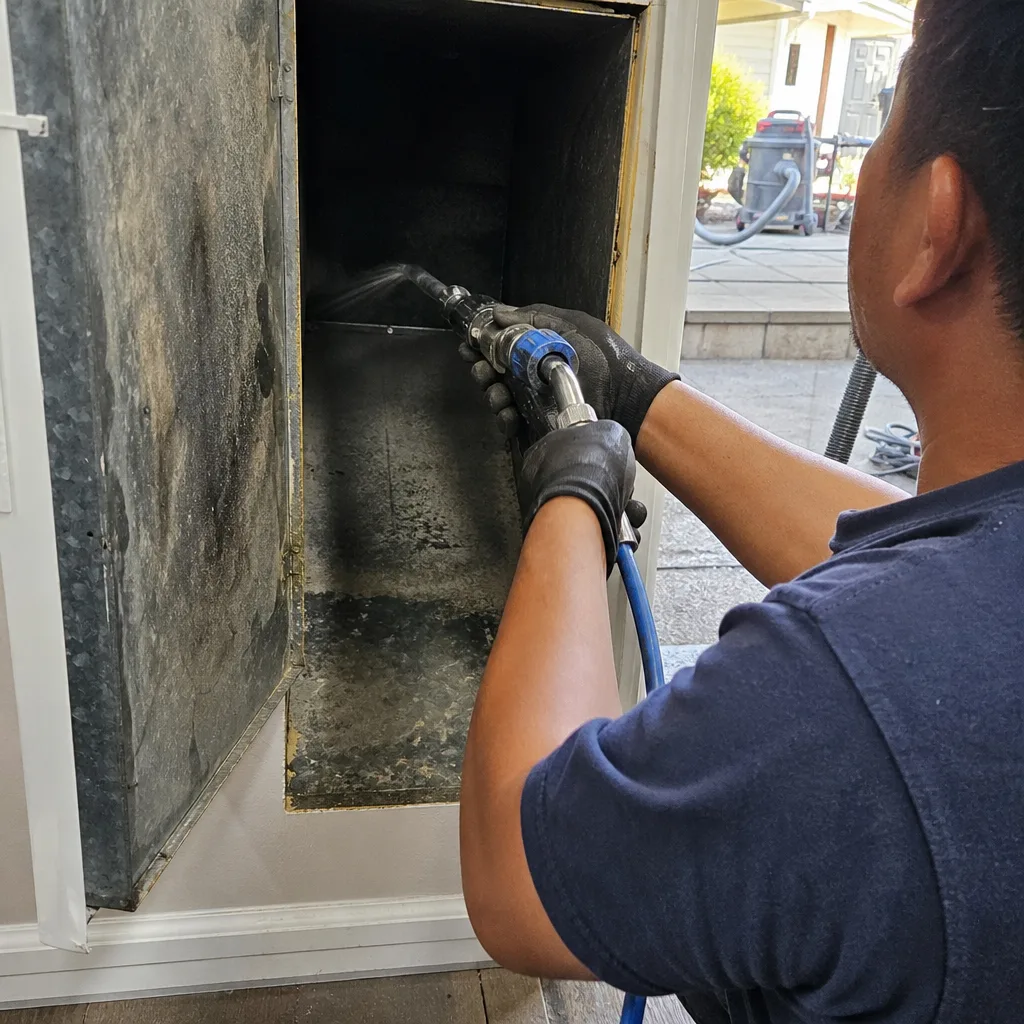
 Whole-home duct cleaning
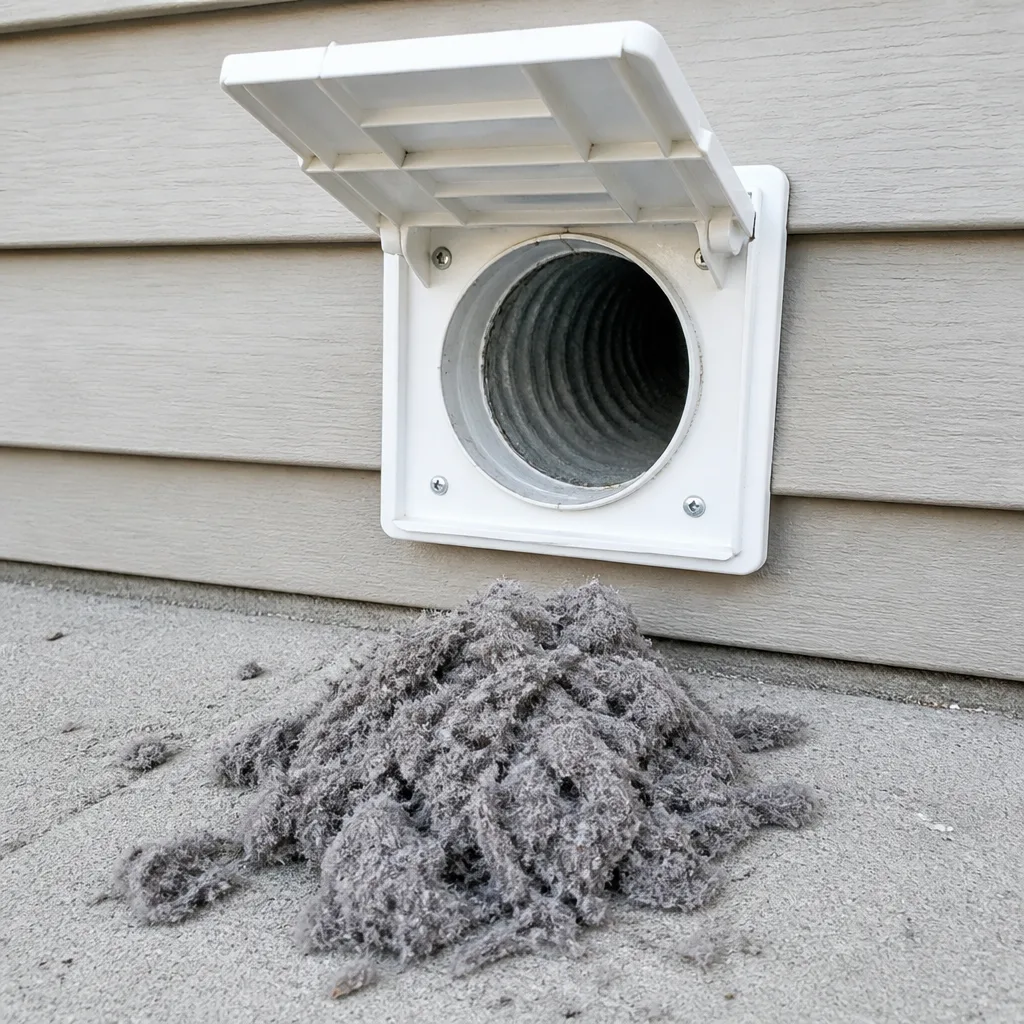 Dryer vent cleaning
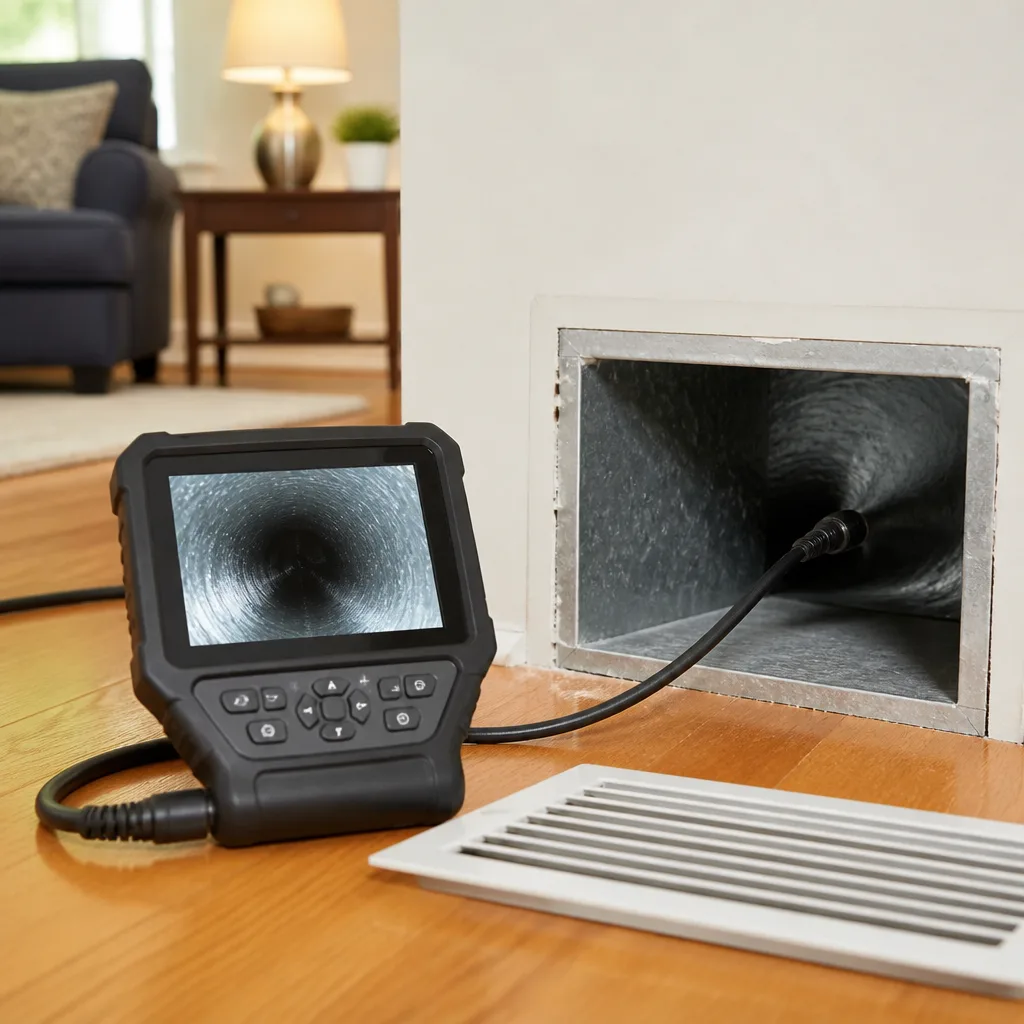 Camera inspection
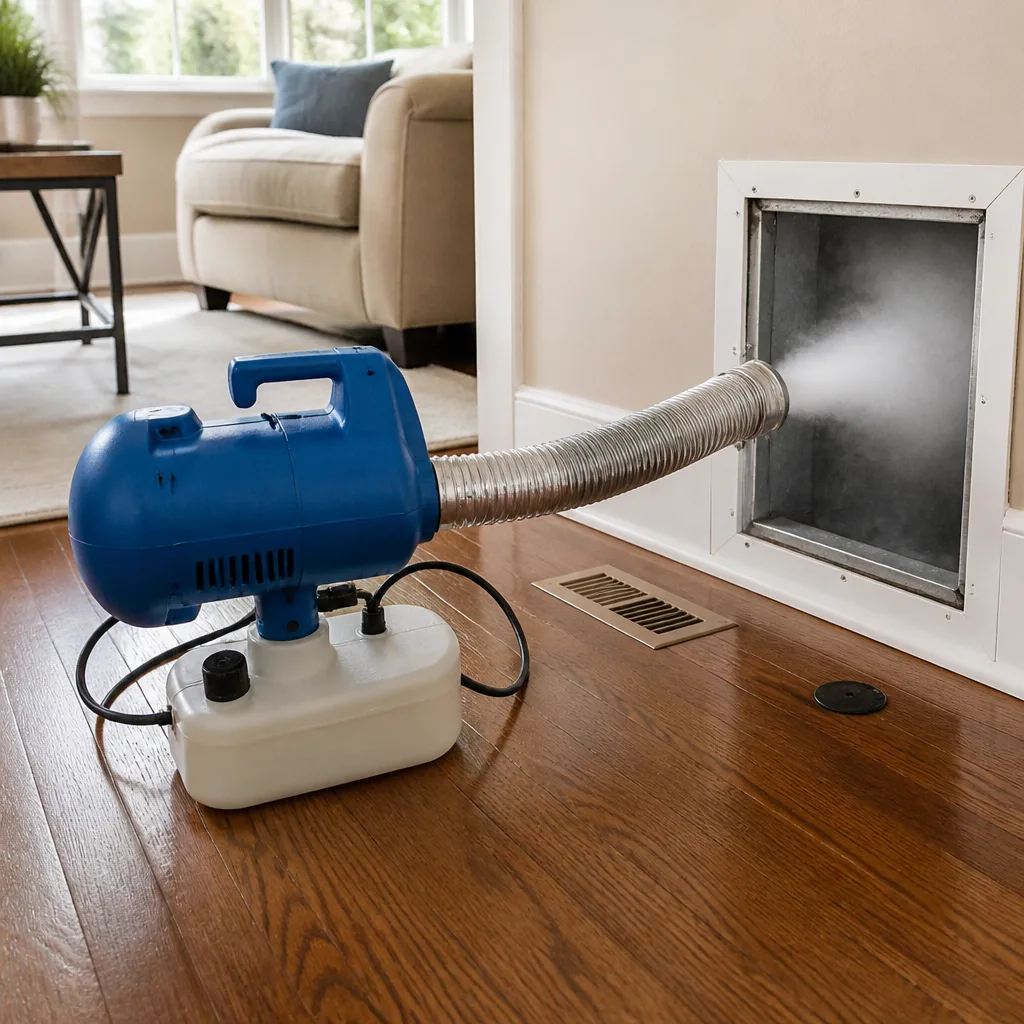 Sanitizing & deodorizing
Whole-system duct and dryer vent check with before-and-after photos - you see exactly what came out of your vents
That "$99 whole-house special" is a bait ad - the real number appears once they are in your hallway, or the "clean" is a shop-vac at the register. We photograph the inside of your ducts before and after instead.
The Complete Guide to Air Duct Cleaning in Lake Forest
Most air duct guides treat the system as one uniform tube. It isn’t. In Lake Forest, the air pathway in a 1970s ranch home on a slab looks nothing like the one in a newer build up near Portola Hills, and each one collects dust differently. That matters because “clean” is not a single standard: it depends on your duct material, your HVAC layout, and how the dry Santa Ana winds load the system each fall. This guide maps the whole pathway, from the air handler to every register, so you know what a real cleaning involves, what it should cost, and how to tell if the job was actually finished. We’ll point out the steps most companies skip, and why skipping them is the difference between fresh air and a fresh invoice.
Quick Answer
Air duct cleaning in Lake Forest removes accumulated dust, debris, and microbial growth from the full air pathway: supply runs, return ducts, the air handler, the coil, and the plenum, using negative-pressure containment and mechanical brush extraction. A complete, methodical job for a typical Lake Forest home usually runs several hours and is priced per system by a written estimate, not per vent. The goal is source removal, capturing contaminants on-site rather than blowing them back into your rooms.
Styles & brands we work with
- Whole-home duct cleaning
- Dryer vent cleaning
- Camera inspection
- Sanitizing & deodorizing
Table of Contents
- Why Lake Forest Ducts Load Differently Than Coastal SoCal Homes
- What “the Full Pathway” Actually Means: Air Handler, Coil, and Return Plenum
- Source Removal vs. Brush-and-Vacuum: What’s the Difference?
- How Home Age and Duct Material in Lake Forest Change the Cleaning Method
- Here’s What Happens During Your Appointment
- What Post-Cleaning Verification Should Look Like
- How Much Does Air Duct Cleaning Cost in Lake Forest?
- How Often Does Your Duct System Really Need Cleaning?
- The Dryer Vent: The Overlooked Half of Air Quality
Why Lake Forest Ducts Load Differently Than Coastal SoCal Homes
The EPA estimates indoor air can be two to five times more polluted than outdoor air. That figure only means something once you know what’s piling up in your specific system. Lake Forest sits inland of the coastal fog belt, in the foothills and valleys south of the Santa Ana Mountains, and that geography changes what your ducts collect. Coastal homes pull in humid, salt-laden air that tends to clump and cling. Lake Forest homes draw in dry, mineral-heavy dust, especially during the Santa Ana wind seasons, when hot, gusting air pushes fine particulate matter inland for days at a stretch. That dry dust is lighter and finer, and it stays airborne longer inside a duct run. It settles into the low points of flex duct, coats the return plenum, and cakes the evaporator coil, which is one of the reasons airflow problems show up here that a homeowner never connects to dust at all.
The seasonal swing matters too. Lake Forest runs a real cooling season, so the system moves a large volume of air for months, then idles in the mild winter. That on-off cycle gives debris time to settle and, in a system with any moisture, time to support microbial growth in the dark, still sections. The result is a specific profile: fine mineral dust in the supply runs, heavier buildup at the return, and odor that shows up most sharply when the system first kicks on after sitting idle. A cleaning plan written for a damp coastal house won’t address it. You need a method built for dry inland dust and a Lake Forest cooling cycle.
We raise this early because it’s the reason a one-size cleaning doesn’t serve every home. A thorough job looks at where your house sits, how it’s built, and what the winds leave behind, then cleans accordingly. That’s the difference between a generic surface pass and a real answer to the air duct cleaning question in this part of Orange County.
What “the Full Pathway” Actually Means: Air Handler, Coil, and Return Plenum
If a company cleans only the visible supply runs and skips the parts you can’t see, they’ve cleaned maybe half your system. The air pathway is a loop, and contamination lives all along it. Here’s what a complete job addresses:
- Supply runs: the branch ducts that carry conditioned air to each register. These are the easiest to reach and the easiest to fake.
- Return ducts: the pathways that pull air back to the system. Return air is dirtier than supply air because it carries what the rooms have already collected, so returns usually hold the heaviest buildup.
- Return plenum: the box or transition where return ducts meet the air handler. It’s often a sheet-metal plenum or a fiberboard return, and it’s a common dust trap that surface cleaners never open.
- Air handler: the indoor cabinet that holds the blower and, in many homes, the coil. Debris here stresses the blower and can foul the coil.
- Evaporator coil: the finned coil where heat exchange happens. A dusty coil loses efficiency and can grow biological material in its damp fins.
- Registers and grilles: the supply and return grilles themselves, removed and cleaned, not just vacuumed in place.
Why does the air handler and coil matter so much? Because that’s where the air you breathe passes over a wet, warm surface for hours a day. A clean coil exchanges heat efficiently and stays dry between cycles. A dirty one insulates itself with dust, works harder, can hold moisture, and becomes a growth surface. Cleaning the branches but leaving a fouled coil and a dusty return plenum is like washing a floor and leaving the drain clogged. It’s worth asking any company, before they start, exactly which of these components are included. The answer tells you whether they’re cleaning the full pathway or just the parts a camera can reach in one pass.
Source Removal vs. Brush-and-Vacuum: What’s the Difference?
Two jobs can look identical from your driveway and be entirely different inside the duct. The distinction is source removal versus a simple brush-and-vacuum pass, and it decides whether the debris leaves your house or just gets stirred up and redistributed.
A brush-and-vacuum job runs a vacuum at one register while a brush scrubs near another. Some dust comes out, but without containment the dislodged material can escape into the room or settle back into sections the vacuum isn’t reaching. It’s fast. It also tends to look impressive in a before-and-after that only photographs the easy runs.
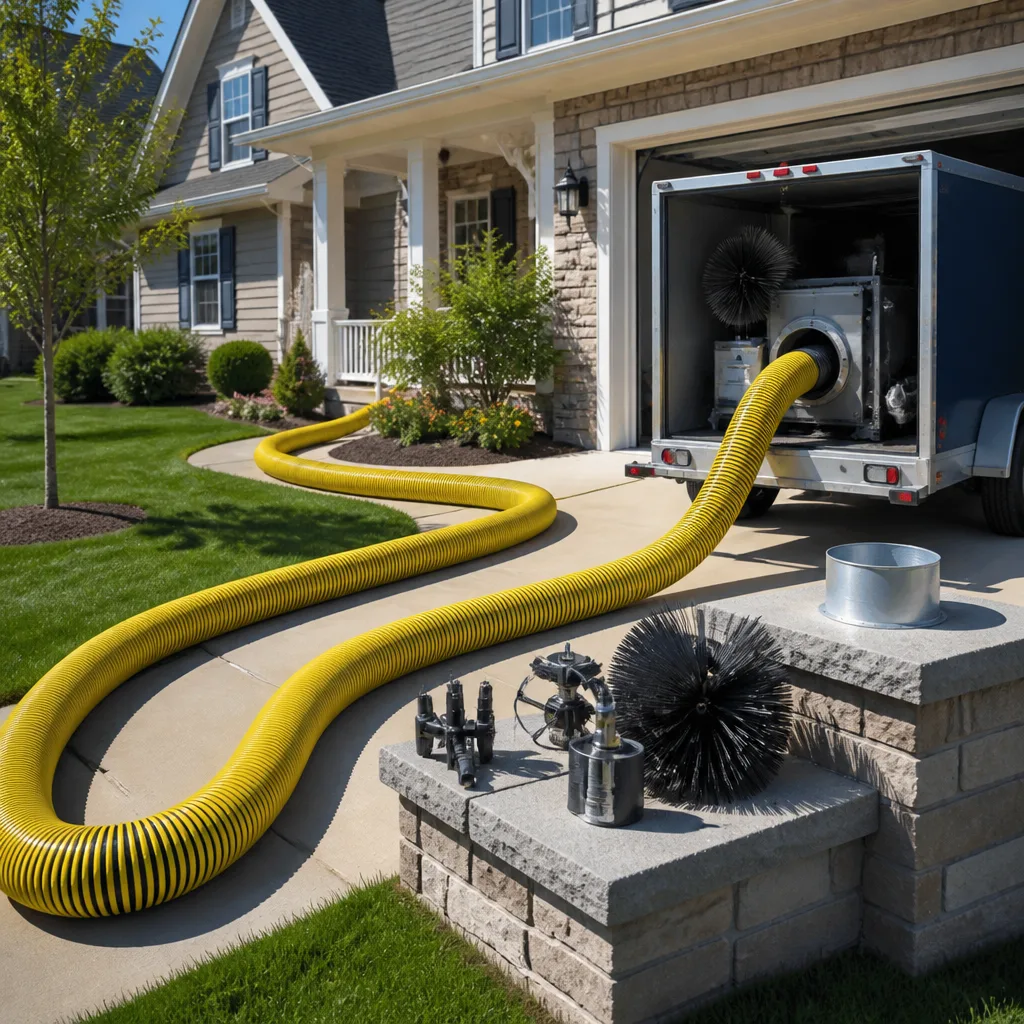
Source removal is a different discipline. It works by maintaining negative pressure on the whole system during cleaning, so once debris is knocked loose, air is flowing toward the collector, not toward your living room. Mechanical agitation from a rotary brush scrubs the duct walls, the material is captured at the source, and nothing recirculates. At Lake Forest Air Duct Cleaning Pros we run this with professional-grade equipment: Rotobrush and Nikro rotary-brush extraction systems, plus Abatement Technologies air filtration running on-site so that what comes out of the ducts is contained during the job. That containment step is the part cheap setups skip, and it’s the difference between cleaner air and a temporary disturbance. If you’re comparing quotes, ask one question: how do you keep debris from going back into the house while you work? The answer separates a real clean from a surface pass.
How Home Age and Duct Material in Lake Forest Change the Cleaning Method
Lake Forest grew up in distinct building waves, and the duct material in your home tells you what method it needs. You can’t clean fiberboard the way you clean sheet metal, and a rotary brush that’s perfect for one will damage the other if it’s handled carelessly. Here’s how the three main materials behave:
- Sheet metal (often the older housing stock): Rigid, durable, and the best candidate for mechanical brush scrubbing. Seams and joints tend to leak over time, which is where duct sealing matters most. Hardware and connection points are accessible and repairable.
- Flexible duct (common in many mid-era homes): A corrugated inner liner that traps fine dust in its ridges. It’s cleanable with the right low-contact method, but the liner is fragile; an aggressive brush or wrong tool can tear it. It also sags or kinks over time, which restricts airflow.
- Fiberboard (used in some builds and returns): A porous, board-like duct material. It holds dust in its surface and can’t tolerate the same brushing as metal. It’s also the material most likely to have absorbed odor or microbial growth, which is why sanitizing treatment often follows a fiberboard clean.
Age compounds this. An older Lake Forest home may have a mix of all three, added to over the years, with sections that no longer match. That’s exactly why cleaning and inspection belong together. When a job turns up a torn flex run, a disconnected joint, or a fiberboard return that’s shedding, the fix has to happen or the cleaning won’t hold. Duct repair and sealing is a core part of what we do for this reason: we can identify and close a leaking or broken section during the same visit, so you don’t have to hunt for a second contractor. A system that leaks pulls dust in from attics and garages, undoing a clean within a season. Sealing what’s leaking is how the work lasts.
Here’s What Happens During Your Appointment
A methodical job follows a sequence, and knowing it helps you judge whether a company is doing the whole thing. Here’s the general shape of an appointment with us:
- Walkthrough and system map. We locate the air handler, the coil, the return plenum, and every branch, and we note the duct materials so the method matches the duct.
- Containment setup. Abatement Technologies filtration and negative-pressure equipment go in place so the work area stays protected and dislodged debris is captured on-site.
- Register and grille removal. Grilles come off and get cleaned separately rather than being vacuumed in place.
- Mechanical extraction. Rotobrush and Nikro rotary-brush systems scrub the duct walls while the vacuum pulls material toward the collector, from the supply runs through the returns and the plenum.
- Air handler and coil attention. The cabinet and coil are addressed, since a clean pathway feeding a dirty coil still delivers compromised air.
- Inspection for damage. We look for torn flex, disconnected joints, and leaking seams while everything is open, and we flag anything that needs repair or sealing.
- Sanitizing treatment where it’s warranted. If there’s microbial growth or persistent odor, a sanitizing treatment addresses it at the source rather than masking it.
- Verification and reinstall. We check the work before the grilles go back on. Details on that next.
No two houses take the same time, and we don’t price by the vent or by the hour. You get one flat price per system, agreed before work starts, so the number you’re quoted is the number you pay. That structure exists for a reason: the industry’s bait-and-switch reputation comes from low teaser prices that balloon once a technician is on site. We’d rather quote honestly up front.
What Post-Cleaning Verification Should Look Like
How do you know the work was actually done? This is the question most companies would rather you didn’t ask, and it’s the step many skip. Verification means proving the result, not just claiming it. A real check happens in three ways:
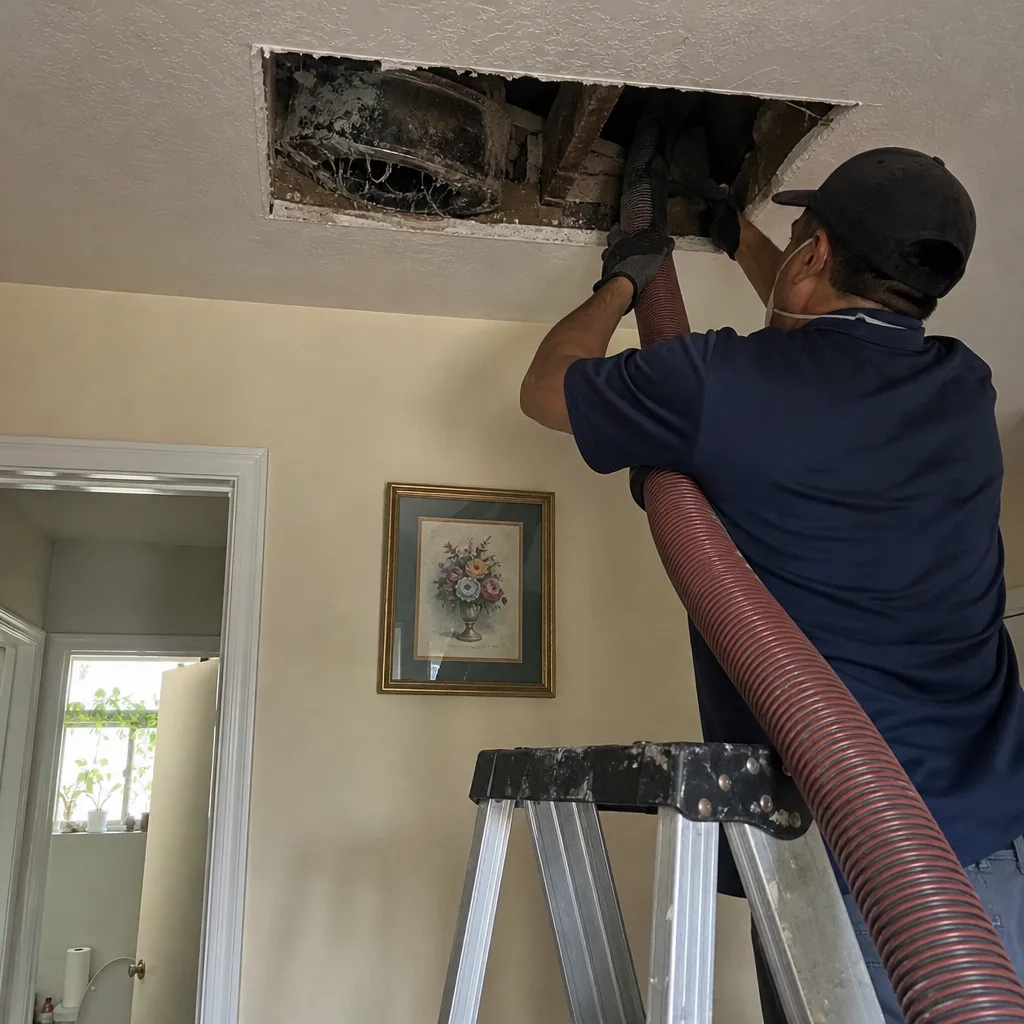
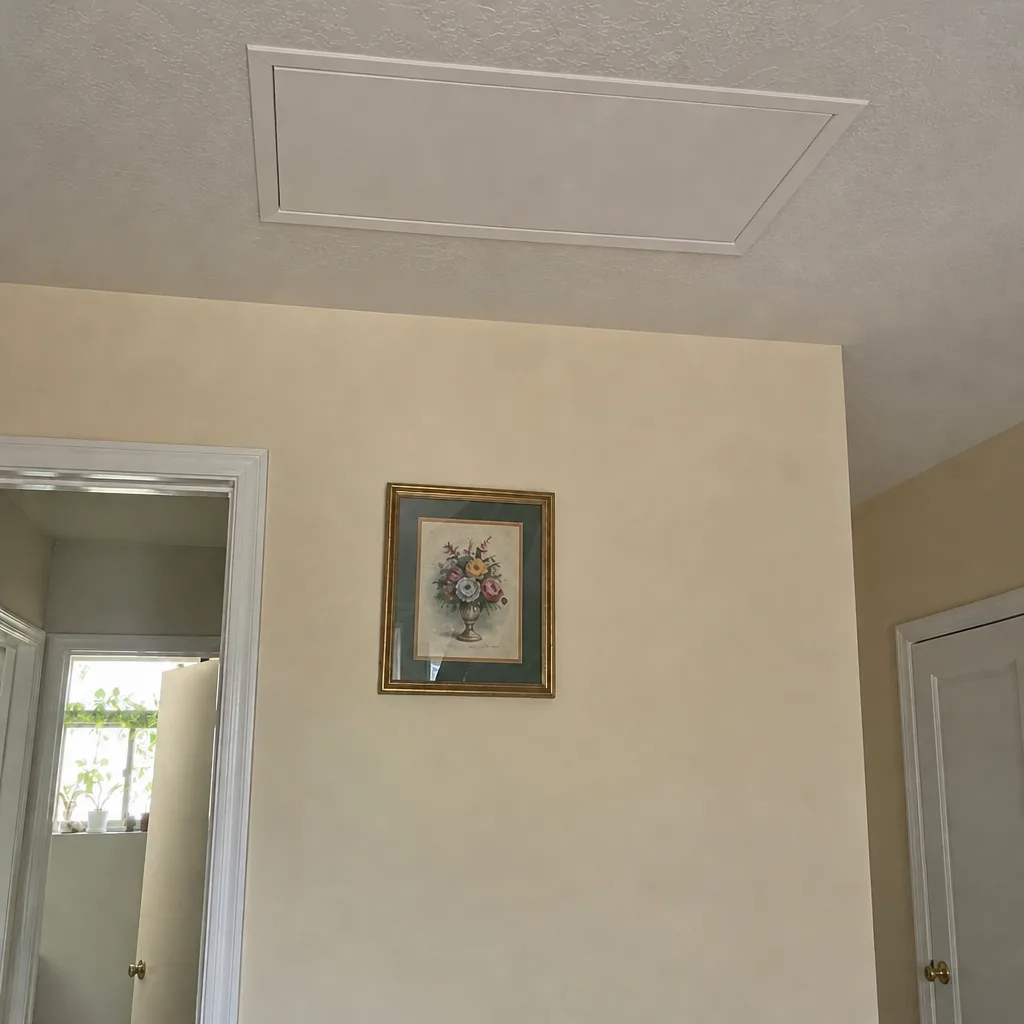
- Before-and-after photos of your own ducts. Not stock images, not a competitor’s gallery. You should see the actual runs inside your house, the way they looked before and after.
- Physical inspection of the cleaned surfaces. Duct walls, the plenum, and the coil should be visibly free of the caked dust that was there before. If a section wasn’t reached, that should be disclosed, not glossed over.
- A clear account of what was found. Torn flex, a leaking seam, a disconnected joint, an odor source. Verification includes telling you what the cleaning revealed and what, if anything, needs repair.
We build this into every job because it protects you and it keeps us honest. When you can see your own ductwork before and after, the question of whether the clean happened answers itself. If a company can’t show you photos of your system, ask why. In our experience, the ones who skip verification are also the ones who clean only what’s easy to photograph. A finished job you can inspect is the whole point.
How Much Does Air Duct Cleaning Cost in Lake Forest?
Air duct cleaning is priced per system, not per vent, because the work is defined by the whole pathway rather than a count of openings. In the Lake Forest market, a complete residential clean typical of local homes generally falls into the ranges below, and the written estimate sets the final price for your specific system. Treat these as typical estimates, not quotes.
- Standard full-system clean (single HVAC system, supply and return): a mid-range whole-job estimate covering the pathway, air handler, and coil.
- Larger or multi-system homes: higher, because there’s more pathway, more plenum, and often mixed duct materials.
- Duct repair and sealing, when damage is found: priced separately per the sections that need it, agreed before work begins.
- Sanitizing treatment, when growth or odor warrants it: an add-on priced with the clean, not a surprise afterward.
- Dryer vent cleaning: a separate, modest line item given the fire-safety value.
Why do we avoid per-vent pricing? Because it rewards a company for counting and penalizes you for a thorough job, and it invites the low-coupon-then-upsell pattern. One flat price per system, agreed up front, is the number you can hold us to. If a quote seems dramatically cheaper than others, ask what it actually includes: usually it’s the supply runs only, with the coil, plenum, and containment left out. Call (833) 468-5640 for an exact quote; estimates are free, and we’ll walk you through what your system needs.
How Often Does Your Duct System Really Need Cleaning?
There’s no single calendar rule that fits every home, despite what some marketing suggests. What matters is your specific conditions, and in Lake Forest the combination of dry inland dust and a heavy cooling season gives a reasonable default of every few years for most homes, adjusted by these signals:
- Recent renovation or move-in. Construction dust and drywall particulate travel deep into ducts, so a clean after a remodel or just before settling into a newly purchased Lake Forest home is worth it.
- Allergy or asthma concerns in the household. If occupants are sensitive, the case for staying ahead of dust and microbial growth is stronger.
- Visible dust at the registers or musty odor on startup. Both point to buildup that’s already circulating.
- Uneven airflow between rooms. Often a sign of a blockage, a sagging or disconnected flex run, or a plenum issue that a clean and inspection will reveal.
- A pet household or a heavy Santa Ana dust season. Both load the system faster than a quiet, pet-free home.
- Your HVAC filter’s condition. If filters clog unusually fast, the system is moving more debris than it should.
We also work around the filtration brand you already run. Teams here are familiar with Honeywell and Aprilaire filtration products and Guardsman air-quality systems, so we can talk intelligently about filter maintenance and compatibility while we’re in your system. A clean duct set paired with the right filter schedule stays clean far longer, and that’s a conversation worth having on the visit rather than guessing later.
The Dryer Vent: The Overlooked Half of Air Quality
Most air duct guides stop at the HVAC system, but the dryer vent is part of your home’s air-and-debris pathway too, and it carries a fire risk that HVAC-only cleaners often leave untouched. Lint is highly flammable, and a vent that’s packed with it traps heat at the dryer and restricts exhaust. Dryer vent cleaning clears that lint from the full run, and it’s included in our service scope precisely because it’s the safety item homeowners most often overlook. If your dryer takes longer than it used to, the outside vent flap barely moves, or you notice a musty smell in the laundry area, those are signs worth acting on. It’s quick to address and it closes a gap that a duct-only cleaner won’t.
We treat the duct system, the HVAC system, and the dryer vent as one connected air pathway. Cleaning, repairing, sealing, and sanitizing under one company means no handoffs and no second contractor for the parts that surface during the work. That’s the full-pathway approach we build every job around, from the HVAC unit to every register.
Common Mistakes to Avoid
- Choosing on price alone. A dramatically cheap quote usually buys a supply-run-only pass, with the coil and plenum left dirty. Ask what’s included before you compare numbers.
- Accepting a per-vent price. Per-vent pricing rewards counting, not thoroughness, and it’s the setup for an upsell once the technician is on site. Insist on one flat price per system.
- Skipping the air handler and coil. A clean pathway feeding a dusty coil still circulates compromised air. Make sure the coil and return plenum are on the work order.
- Letting a torn flex run go unrepaired. In Lake Forest’s dry, dusty conditions, a leaking or disconnected duct pulls dust straight back in and undoes the clean. Repair and seal when damage turns up.
- Never asking for before-and-after photos of your own ducts. Without them, you have no way to verify the work. It’s a fair request and a clear differentiator.
- Ignoring the dryer vent. It’s a fire-safety item, not a cosmetic one, and it’s easy to forget when the focus is on the HVAC ducts.
- Assuming one cleaning method fits your duct material. Sheet metal, flex, and fiberboard each need the right tool and care. A company that doesn’t ask what your ducts are made of isn’t matching method to material.
See the difference
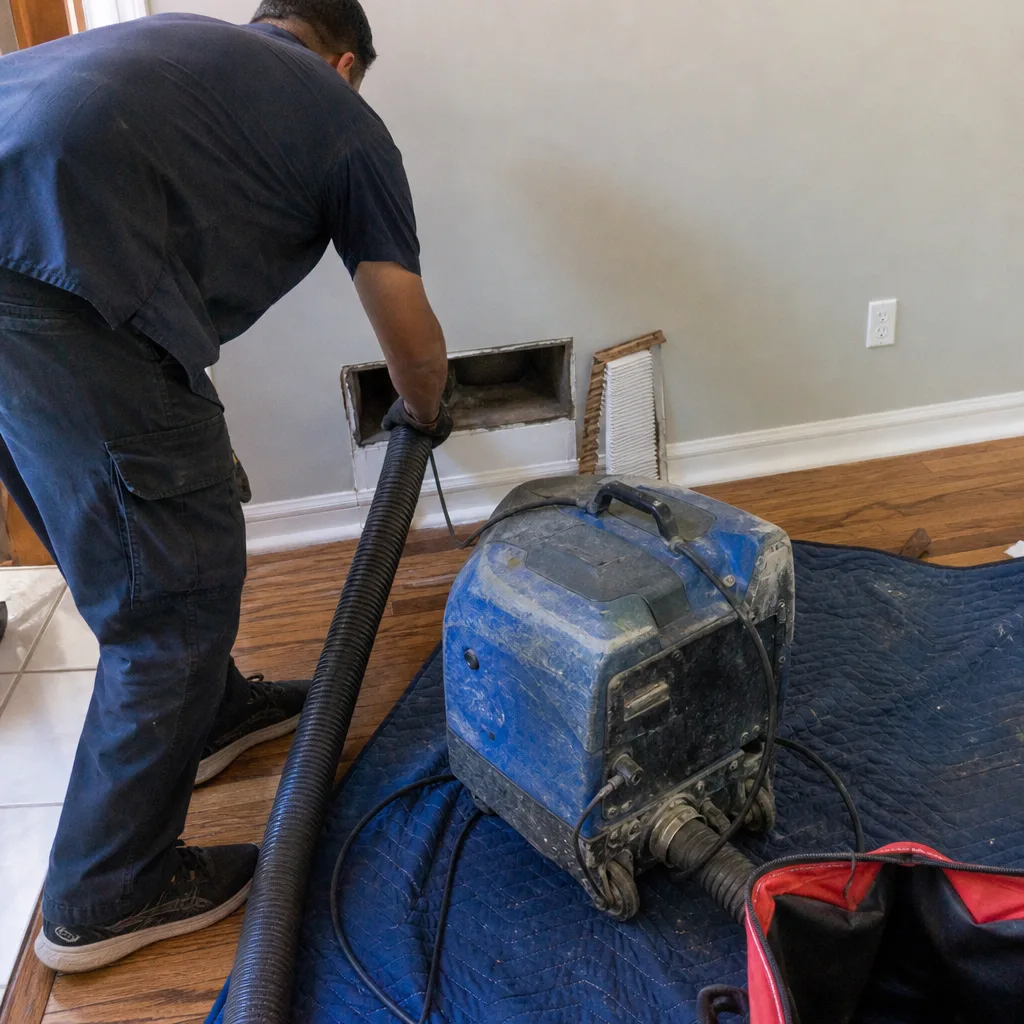 Before
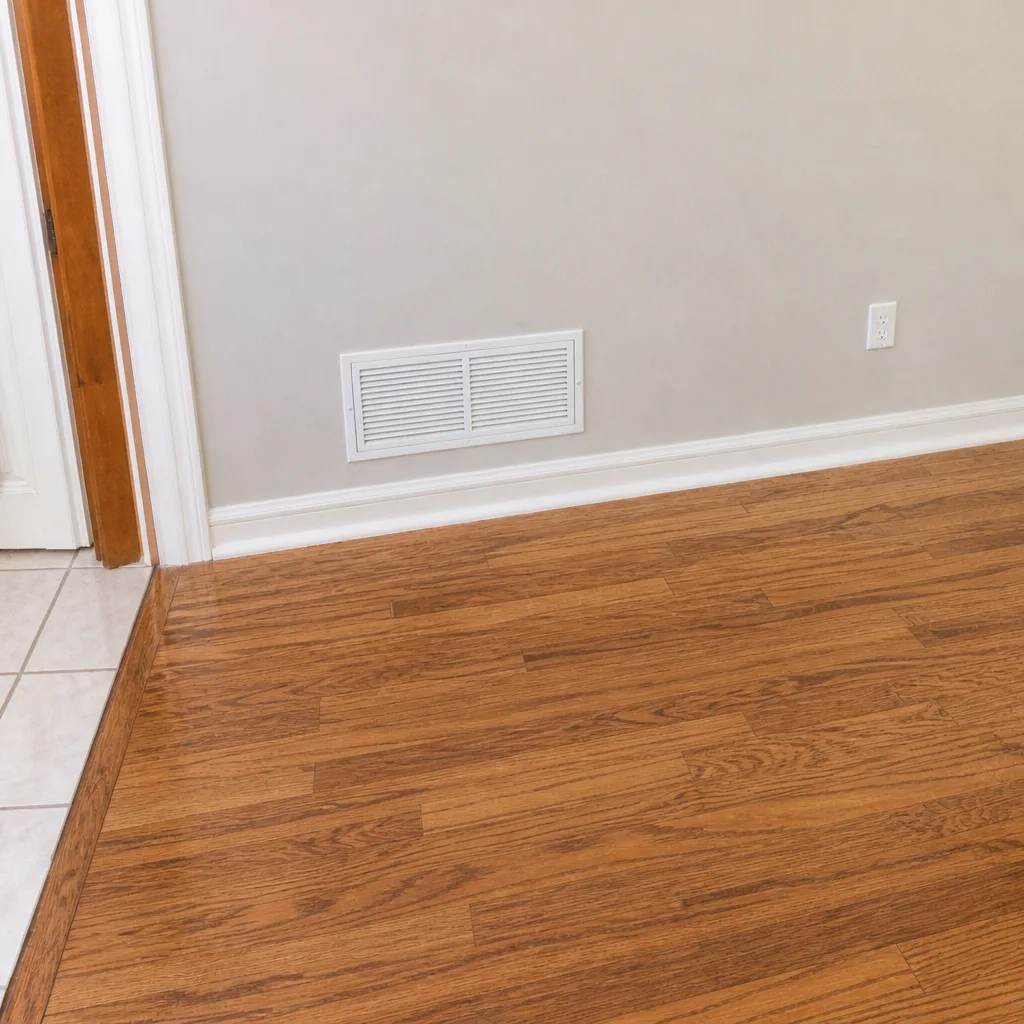 After
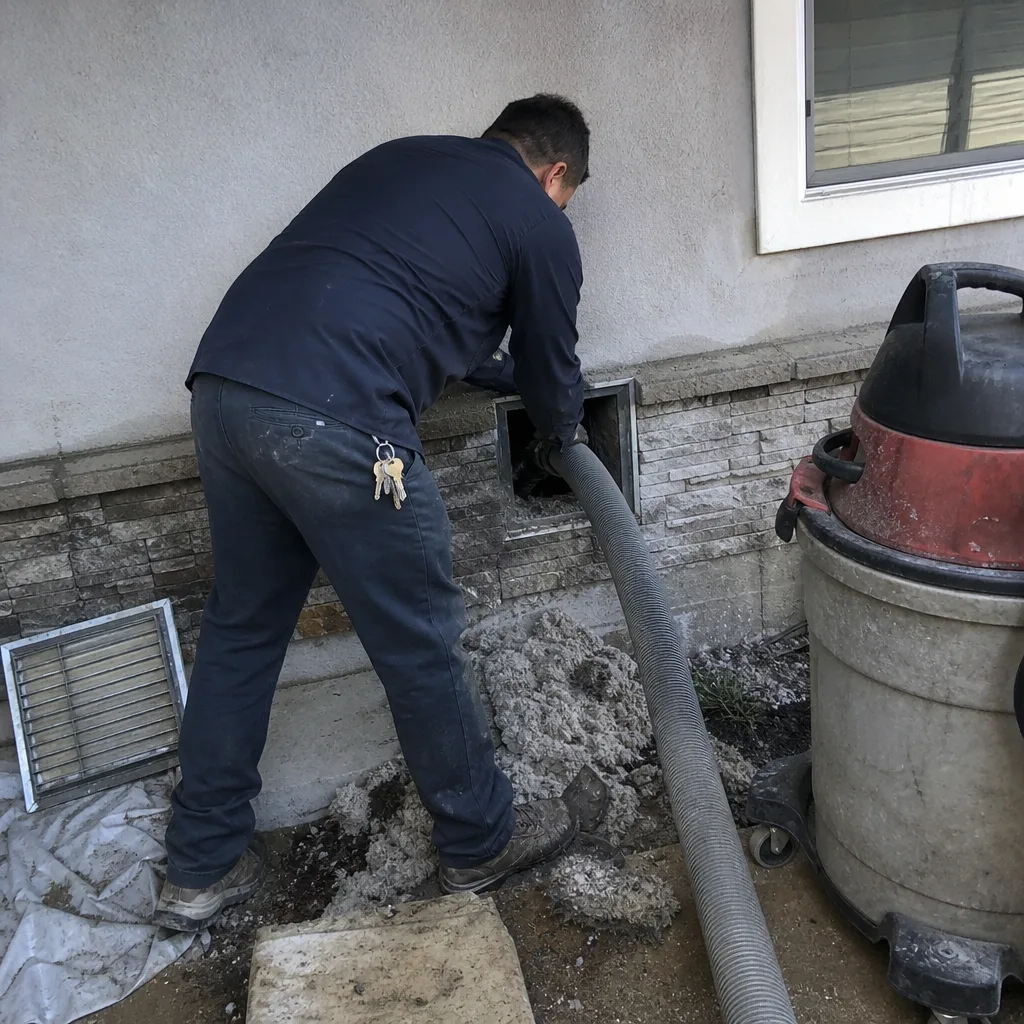 Before
 After
 Before
 After
When to Call a Professional
Some conditions clearly call for a trained technician rather than a wait-and-see. If you’ve just finished a renovation or moved into a Lake Forest home and don’t know the duct history, a full-system clean and inspection gives you a known starting point. If anyone in the house has allergy or asthma concerns, or you notice musty odor when the system starts, the buildup is already circulating. Visible dust at registers, uneven airflow between rooms, a filter that clogs fast, or a dryer that’s taking longer than it should are all signals worth acting on. Duct issues that involve torn flex, a leaking seam, or a disconnected run need repair, not just a clean, and that’s work best left to a professional. Lake Forest Air Duct Cleaning Pros offers free estimates in Lake Forest. Call (833) 468-5640, and we’ll assess your system and give you a flat price per system before any work begins.
Frequently Asked Questions
Air duct cleaning in Lake Forest is priced per system, not per vent, and a complete residential clean typical of local homes generally falls into a mid-range estimate that the written quote sets precisely. Larger or multi-system homes run higher, and repairs or sanitizing are priced separately with the clean. Call (833) 468-5640 for an exact quote; estimates are free.
Cheap quotes are usually cheap because a lot is left out: containment, the air handler and coil, the return plenum, and verification. A supply-runs-only pass is fast and looks fine, but it skips the dirtiest parts of the pathway. Ask what’s included and how debris is contained, then compare. Call (833) 468-5640 and we’ll tell you exactly what a complete job covers.
You know because you can see it: before-and-after photos of your own ducts, a physical inspection of the cleaned surfaces, and a clear account of anything the clean revealed. If a company can’t show you the inside of your system, that’s your answer. We build verification into every job. Call (833) 468-5640 to book an estimate.
Every few years is a reasonable default for most Lake Forest homes, adjusted for renovations, pets, allergy concerns, and the heavy Santa Ana dust seasons. Visible register dust, musty startup odor, or uneven airflow mean it’s due sooner. Call (833) 468-5640 and we’ll advise based on your system, not a sales script.
You’ll find sheet metal, flexible duct, and fiberboard across the different building eras here, and yes, the method changes: sheet metal tolerates mechanical brush scrubbing while flex is fragile and fiberboard needs gentler handling and sometimes sanitizing. Matching tool to material is part of the job. Call (833) 468-5640 to schedule an estimate.
We clean the full pathway, including the air handler, evaporator coil, and return plenum, and we handle dryer vent cleaning as part of the scope, since the vent is an overlooked fire-safety item. Duct repair and sealing and sanitizing are available when the work reveals a need. Call (833) 468-5640 to talk through what your system needs.
The Bottom Line
Your duct system isn’t one uniform tube, and Lake Forest’s dry inland dust, distinct building eras, and real cooling season make the cleaning method home-specific. A complete job cleans the full pathway, contains debris at the source, addresses the air handler and coil, repairs and seals what’s leaking, and proves the result with your own before-and-after photos. It’s priced as one flat price per system, agreed before work starts. Dryer vent cleaning belongs in the same visit. If you want the whole pathway handled properly, from the HVAC unit to every register, that’s what Lake Forest Air Duct Cleaning Pros does. Our technicians have up to 10 years of experience, and every estimate is free.
Contact Us
Ready to find out what’s really inside your ducts? Call (833) 468-5640 for a free estimate on air duct cleaning, HVAC cleaning, dryer vent cleaning, duct repair and sealing, or air quality and sanitizing in Lake Forest. One flat price per system, agreed before work begins, and before-and-after photos you can inspect. We answer 24/7. Fast dispatch from 7am to 7pm, Sunday through Friday.
Written by the team at Lake Forest Air Duct Cleaning Pros.